END-GRAIN GUIDES
Why end grain cutting boards are quieter: what happens under the knife
Why end grain cutting boards are quieter: grain, board mass, and counter contact shape each chop.
The short answer
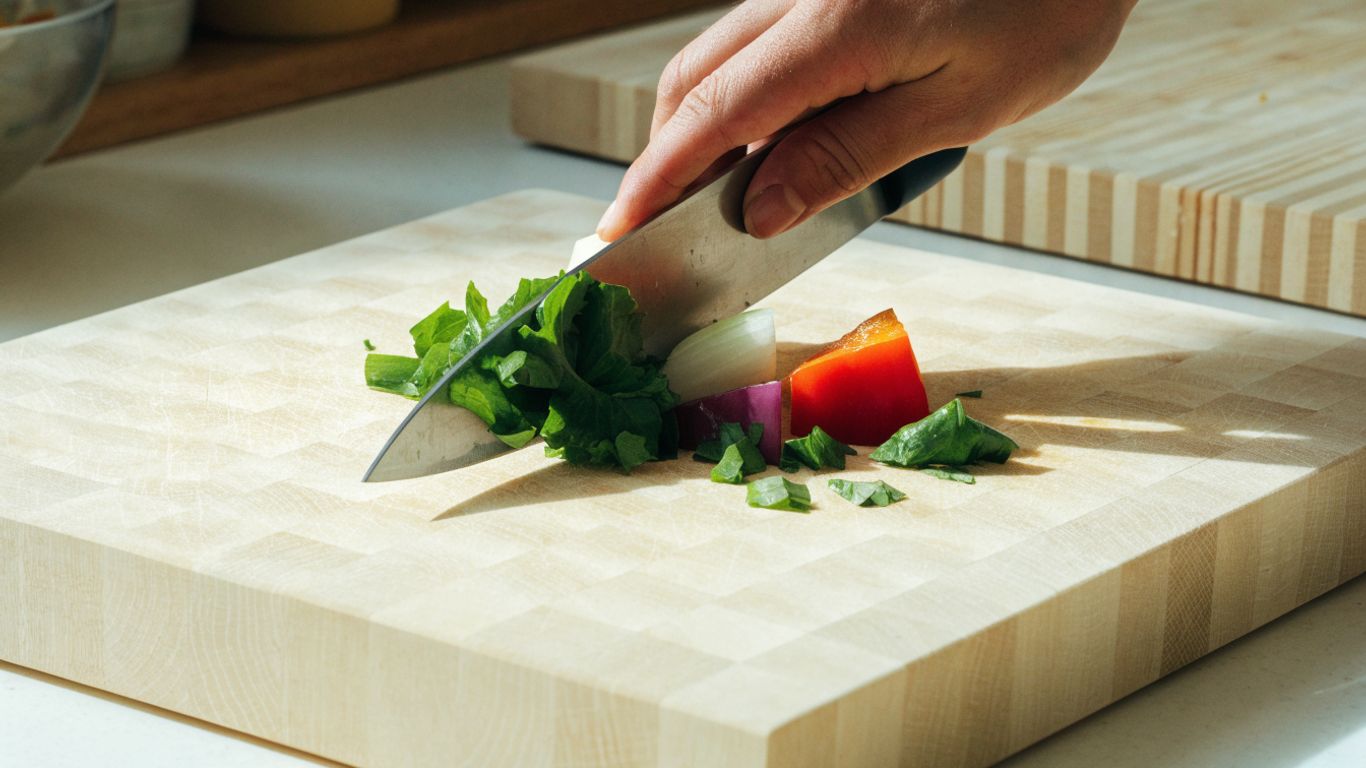
End grain can make a knife strike sound softer because the blade meets the exposed ends of wood fibers, but it is only one part of the sound you hear. Board mass, construction, counter contact, and your chopping motion all matter.
- End grain presents the cut ends of wood fibers at the surface.
- The board and counter can amplify or damp the sound of each strike.
- A heavier, well-seated board may rattle less, though its grain alone does not guarantee quiet.
- Dryness, loose feet, and a forceful chopping style can make any board sound sharper.
- For a fair comparison, keep the knife, motion, and counter the same.
How does end grain change the sound of a knife strike?
End grain changes the way the blade meets the wood, which can make a chop sound less hard-edged. It is a tendency, not a promise: the board’s build and the surface beneath it still shape what reaches your ears. The simplest way to understand the difference is to look at the direction of the fibers.
The direction of the wood fibers
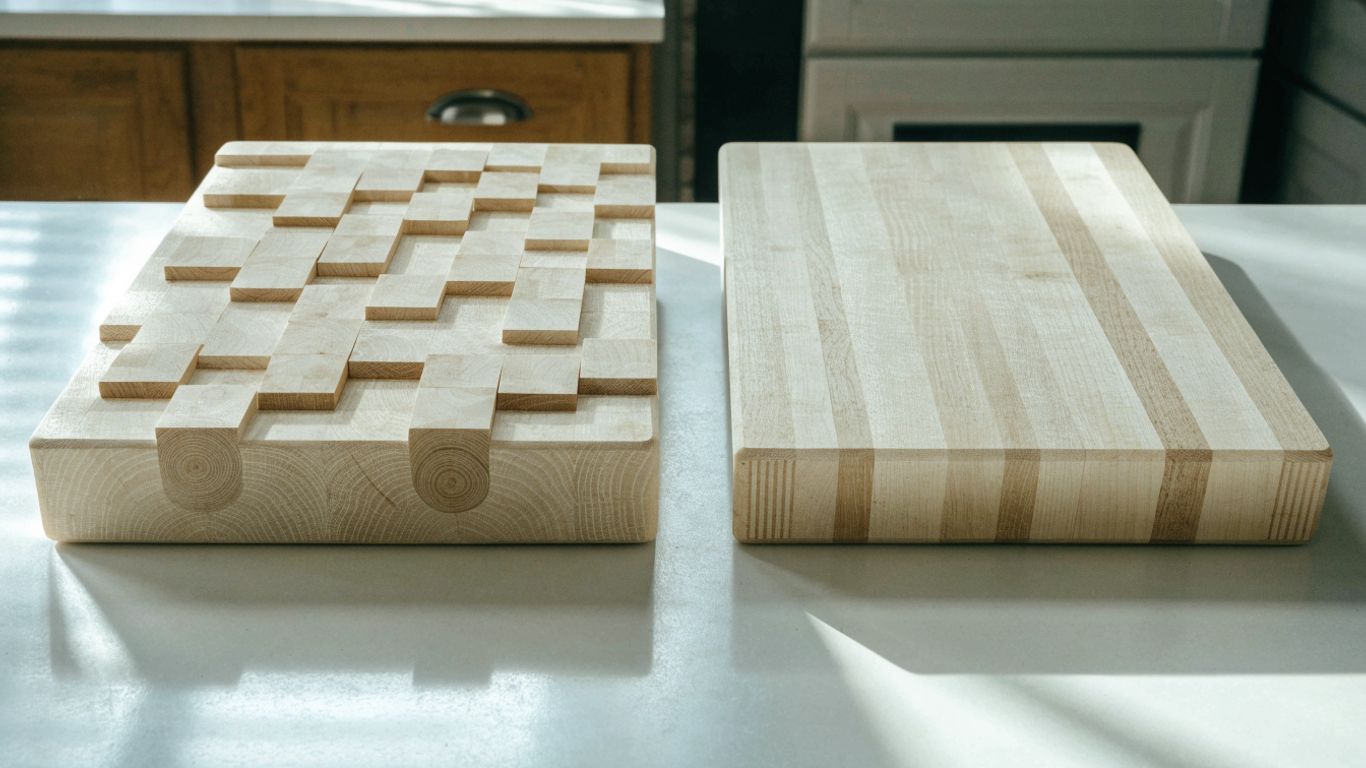
On an end-grain board, the cut ends of the fibers face upward. The blade enters between them rather than landing across their length, so the contact can feel a little less abrupt than on a firmer-feeling surface. This is one reason people describe end grain as having a cushioned feel, though the effect varies with the wood and board. For a broader comparison of end-grain and edge-grain maple boards, consider both the knife feel and the rest of the construction.
How the blade meets the board’s surface
A knife strike is a brief collision: the blade, food, board, and counter all contribute to the sound. With end grain, the blade presses into the fiber ends, which can give slightly under the impact. That does not make every chop quiet; a hard downward strike still sends energy through the whole setup. The useful distinction is a softer-feeling contact, not silence.
Why the same cut can sound different on another board
Two boards with the same grain orientation may still sound different because they differ in wood, thickness, weight, and how firmly they rest on the counter. A cut through a carrot also lands differently from a cut through a soft herb, even with the same knife. The whole setup matters more than the label on the board. If you want background on the construction behind those differences, this guide to how end grain boards are made walks through the basic build.
What makes a cutting board sound louder or softer?
A cutting board’s sound comes from more than the knife meeting wood. The wood’s response, the board’s mass, and its contact with the counter can all change how much vibration you hear. You can use those factors to make sense of why one board sounds muted and another rings or rattles.
Wood type and density
Wood species and density affect how a board responds to a blow, but grain orientation and construction matter too. Hard maple, for example, is a dense hardwood; that fact alone does not predict exactly how loud a particular board will sound. The Bevel & Bond End-Grain Maple Cutting Board is made from North American hard maple, a documented material detail, not an acoustic rating. Treat any sound comparison as specific to the boards in front of you rather than a rule about every board of a given species.
Board thickness, weight, and mass
A board with more mass may move less when you chop, while a thin, light board can shift or vibrate more readily. A quick comparison of the factors helps separate the board’s own response from the sound of a loose setup:
| Factor | What it may change | What to notice |
|---|---|---|
| Grain orientation | How the blade contacts the fibers | A softer or firmer-feeling strike |
| Board mass | How much the board moves | Shifting or a hollow ring |
| Counter contact | How vibration travels below the board | Buzzing or rattling at the edges |
| Chopping force | The energy of each impact | A sharper sound from a harder strike |
The Bevel & Bond End-Grain Maple Cutting Board measures 17 × 13 × 1.75 inches and weighs about 10 pounds. Those dimensions and its weight describe the board, but they do not establish how it will sound on every counter. The table is a useful reminder to change one factor at a time when you compare boards.
How firmly the board sits on the counter
A board that rocks, slides, or rests on an uneven surface can add noise unrelated to the cutting surface itself. Even a substantial board may buzz if one corner lifts or a foot is loose. Set it on a clean, flat counter and press lightly at the corners before judging its chopping sound. If it moves under your hand, fix that first; otherwise you may be listening to the counter contact, not the grain.
Why can end grain soften chopping noise?
End grain may soften chopping noise because its fibers can yield slightly as the blade enters, making the contact feel less abrupt. How much that matters depends on the assembled board and what is underneath it. This is a modest acoustic effect, not a guarantee that an end-grain board will always be quieter than another surface.
How the wood can give slightly under impact
When the blade meets end grain, the exposed fiber ends can part around the edge. That small give may take some of the sharpness out of the contact, especially in a steady chopping rhythm. You can also notice the different feel under the knife, which is not the same thing as a measurable reduction in sound. For a related discussion of the blade’s contact with wood, see why end grain is easier on knives.
How board construction affects vibration
An end-grain board is assembled from blocks, so the quality and stability of the finished construction matter alongside grain direction. A solid, flat board can respond differently from one that rocks or has loose parts, even if both present end grain at the surface. Construction details are why the same basic idea can produce different sounds in two kitchens. A quiet board needs a stable base as well as a surface that feels forgiving.
Why a quieter chop does not mean a duller knife
A softer-sounding chop does not tell you whether a knife is sharp. Sound depends on the board, the food, the counter, and the force of the cut; sharpness is better judged by how cleanly and predictably the blade cuts. End grain’s sound is not a knife-care test. If a blade feels blunt or slips through food, assess its edge separately rather than relying on what you hear.
Why are end grain boards not always quieter?
End grain boards are not always quieter because small problems around the board can dominate the sound. A loose foot or uneven counter may make a substantial board rattle, while a dry surface or forceful stroke can produce a sharper impact. Grain orientation is one influence among several, so listen to the whole setup.
Loose feet or an uneven counter can add noise
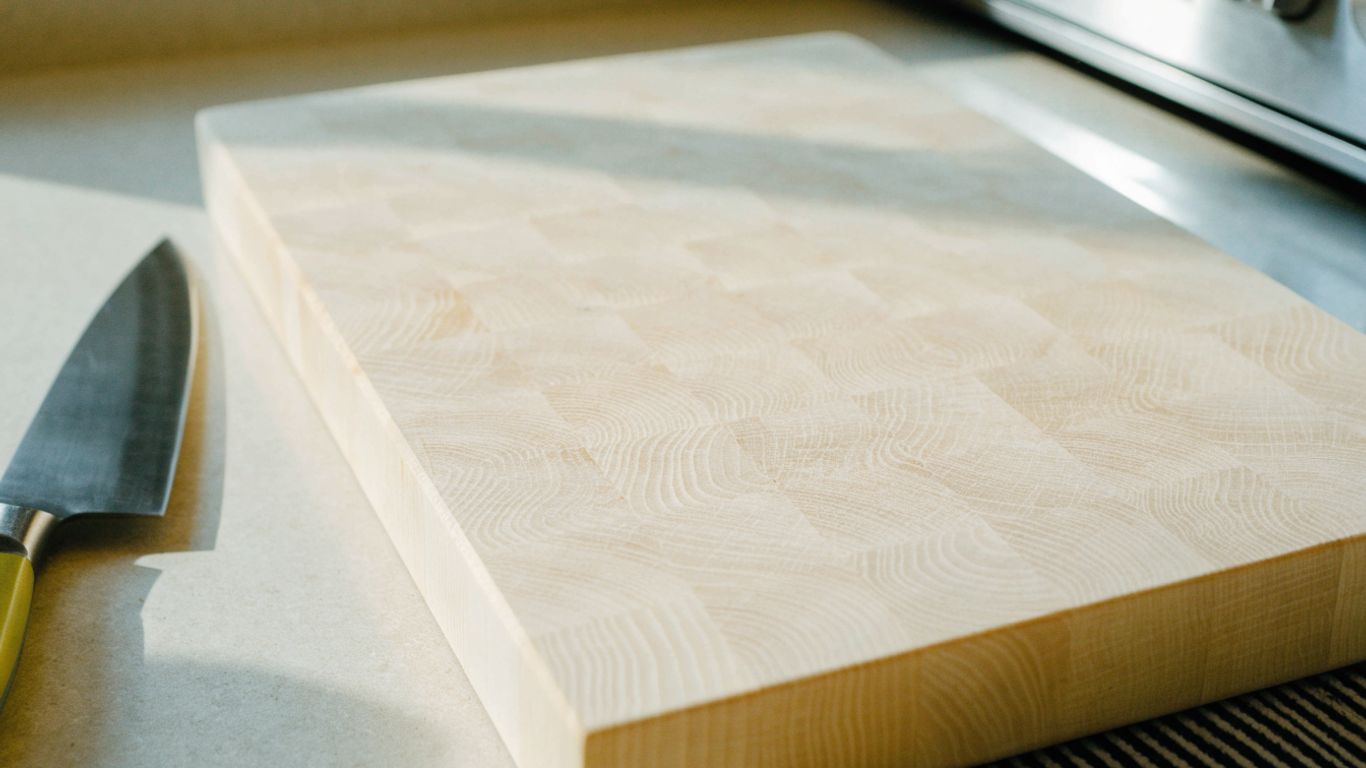
If a board rocks, the lifted corner can tap the counter during each cut. A loose or worn foot can make a similar tapping or buzzing sound. The Bevel & Bond End-Grain Maple Cutting Board has non-slip feet, but that feature does not remove the need for a flat counter or guarantee a particular sound. Check for movement before attributing a rattle to the board’s wood.
A dry or poorly maintained board may sound sharper
Wood that has been neglected can feel rougher or develop surface wear that changes how a blade lands. Regular care helps maintain the surface, though it cannot promise a certain acoustic result. For wooden boards, follow the maker’s care guidance, wash by hand, dry thoroughly, and avoid soaking. A board that is clean, flat, and cared for is also easier to compare fairly.
Knife weight and chopping style change the impact
A heavy knife driven down hard will usually make a more forceful contact than a lighter knife used with a controlled motion. The food matters too: dense ingredients can make a different sound from delicate ones. To lower noise, you do not need to baby the knife; avoid adding force after the blade has already passed through the food. A relaxed, consistent cut is easier on your hands and gives you a more useful comparison.
How can you compare board noise in your kitchen?
To compare board noise, keep the conditions as steady as you can and change only the board. Your counter can act like part of the instrument, so a different location may change the sound even when your cutting is consistent. A few simple checks are more useful than a quick impression from a different day.
Use the same knife and cutting motion
Pick one knife and one ingredient, then use a steady motion and similar-sized cuts on each board. Avoid comparing a light slicing pass on one surface with a hard chop on another. You can keep the process simple:
- Choose the same knife and a similar section of the same ingredient.
- Use the same part of the board for each set of cuts.
- Keep your pace and downward force as consistent as you can.
- Repeat the comparison once, since a single strike can be misleading.
Afterward, compare the overall sound rather than deciding from one loud or quiet cut. This is not a laboratory test, but it can help you identify whether the board or your technique is driving the difference.
Test on the same counter surface
Place each board in the same spot on the same counter, and check that it sits flat before you begin. A towel or mat beneath one board but not the other changes the setup, so leave it out of the initial comparison. Once you have a baseline, you can try a nonslip layer separately and note whether it changes the rattle or the chop itself.
Listen for rattling as well as the chopping sound
A short, sharp contact and a hollow rattle are different clues. The first may come from the knife striking the board; the second often points to movement between the board and counter. Pay attention to whether the sound continues after the cut or changes when you steady the board. That small distinction can save you from blaming the grain for a loose foot.
How can you make any cutting board quieter?
The simplest ways to quiet a cutting board are to stop it from moving, keep it in good condition, and use a controlled cut. These adjustments may reduce rattling and soften harsh impacts, but they will not make every kitchen silent. Start with stability before changing your knife technique.
Add a nonslip mat beneath the board
A thin nonslip mat can help keep a board from sliding and reduce tapping caused by movement. Make sure the counter and the underside of the board are clean and dry so the mat sits evenly. If the board still rocks, the counter or board may be uneven; a mat can improve grip but cannot correct every uneven surface. Recheck stability before chopping.
Keep the board flat and properly maintained
Wash a wooden board by hand with mild soap and warm water, then dry it upright. Do not soak it or put it in the dishwasher. Food-grade mineral oil or a suitable board conditioner can help care for the wood; follow the product’s directions and keep both sides in mind. A clean, maintained surface is easier to use and less likely to distract you with roughness or movement.
Use a controlled chopping motion instead of striking hard
A deliberate cut makes less unnecessary impact than swinging the knife down with extra force. Let the blade do the work, and use a steady rhythm rather than trying to silence each strike by changing your grip mid-cut. Your board may still make a sound, of course. The goal is a stable, comfortable prep surface, not a kitchen with the acoustics of a library.
Is a quieter board worth it?
End grain can make chopping feel and sound softer because the blade meets the ends of the wood fibers, but board mass, construction, counter contact, and technique all shape the result. If you compare boards on the same surface and keep your knife motion steady, you can tell whether the difference comes from the board or from the setup around it.
Best for
- Cooks bothered by chopping noise: an end-grain board with enough mass to stay put.
- Boards that buzz or rattle: better contact with the counter below.
- Hard, fast choppers: a lighter strike, since a harder strike sounds sharper.
Frequently Asked Questions
Are end grain cutting boards quieter than edge grain?
They may sound softer because the blade meets the exposed ends of the fibers, but the result depends on the board’s mass, construction, counter contact, and how you chop.
Why does my end grain board still sound loud?
A hard chopping motion, loose foot, rocking board, or resonant counter can make the sound sharper or add rattling, regardless of grain orientation.
Does a heavier cutting board make less noise?
A heavier board may move less during chopping, but weight alone does not determine sound. Its contact with the counter and the force of each cut matter too.
Can a nonslip mat reduce chopping noise?
A mat may reduce noise caused by sliding or tapping by helping the board stay in place. It does not guarantee that the blade strike itself will sound quieter.
Does a quieter chopping sound mean my knife is dull?
No. Sound is influenced by the board, ingredient, counter, and chopping force. Judge the knife by how it cuts rather than by the volume of each strike.
Does the type of wood affect a board’s sound?
Wood species and density can influence how a board responds to impact, but grain orientation, thickness, construction, and the surface beneath it also contribute.
How can I compare two cutting boards fairly?
Use the same knife, ingredient, chopping motion, and counter location. Check that each board sits flat, then listen for both the knife strike and any rattling.
What should you do next?
- Listen to your current board and note whether it rings, buzzes, or shifts.
- Try a damp towel or non-slip mat underneath before buying anything new.
- Ease off your chopping force and let a sharp edge do the work.
- If two people prep at once, read an end grain board for a two-cook kitchen.
- For heavy chopping, see an end grain board for cleaver work.
SEE AN EXAMPLE