END-GRAIN GUIDES
How to clean and oil a carbon steel knife: A practical care guide
Learn how to clean and oil a carbon steel knife with simple washing, drying, rust, and storage tips.
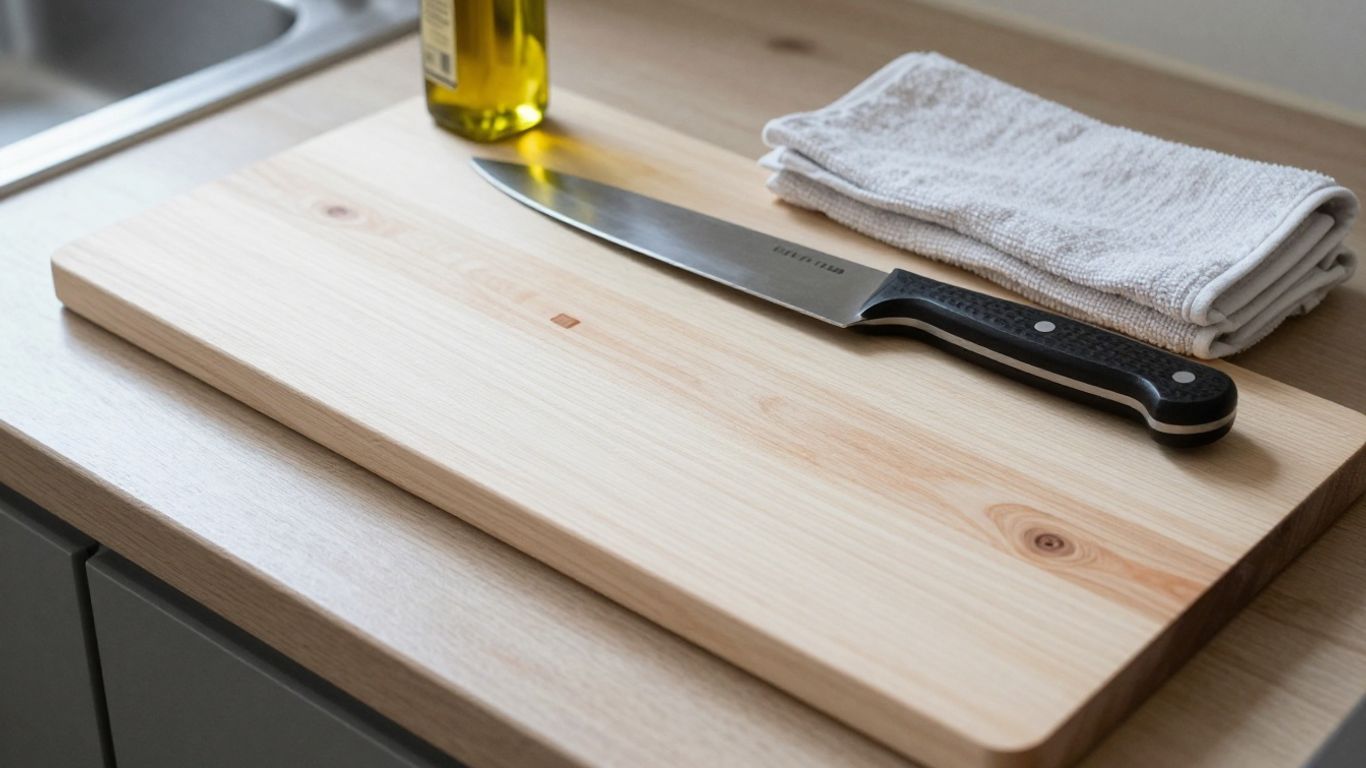
The short answer
Carbon steel needs a little more attention than stainless steel: wash it promptly, dry it fully, and oil it lightly when storage calls for it. The routine is simple once you make it part of cooking cleanup.
- Rinse or wash food from the blade soon after cutting.
- Use mild soap and a soft sponge, and never leave the knife soaking.
- Dry the blade and handle completely before putting the knife away.
- Use a thin layer of food-safe oil for longer storage or when the blade needs it.
- Treat gray or blue patina differently from orange, active rust.
What supplies do you need?
You do not need a special kit to care for a carbon steel knife. Mild soap, a soft sponge, a clean towel, and a suitable blade oil are enough for routine care. Keep the setup close to where you prep, because a quick cleanup is easier than dealing with rust later.
Choose a mild dish soap and soft sponge
A small amount of ordinary dish soap will remove food residue without requiring strong cleaners. Use the soft side of a sponge or a dishcloth, then rinse the blade well so soap and loosened food do not remain along the edge. A dedicated clean towel nearby makes it easier to dry the knife right away.
Pick a food-safe oil for the blade
For occasional protection, choose an oil intended for food-contact surfaces, such as food-grade mineral oil. Some knife-care guidance also uses camellia oil. Cooking oils such as olive or vegetable oil are poor choices for storage because they can become sticky or rancid. The table below gives you a quick way to distinguish the options.
| Oil choice | Practical use | Keep in mind |
|---|---|---|
| Food-grade mineral oil | Light blade protection | Use sparingly and wipe off excess |
| Camellia oil | Occasional blade care | Choose a product intended for knife or food-contact use |
| Olive or vegetable oil | Not recommended for storage | These oils can break down and become rancid |
Use just enough oil to leave a very thin film, not a visible slick. If you are unsure whether an oil is suitable for contact with food, check its label and intended use.
Keep an abrasive scrubber and harsh cleaner out of your routine
Abrasive pads and aggressive cleaners can scratch or damage the blade finish, and they are unnecessary for ordinary food residue. Start with soap, water, and a soft sponge; if a stain or rust spot remains, address it separately with a gentle method. The goal is to remove the problem without turning everyday washing into a scouring session.
How do you clean the knife after each use?
Wash the blade soon after you finish cutting, especially if it has touched acidic or salty food. Leaving residue on carbon steel gives moisture and food acids more time to react with the surface. A quick rinse is often enough between tasks; wash with soap when you are done.
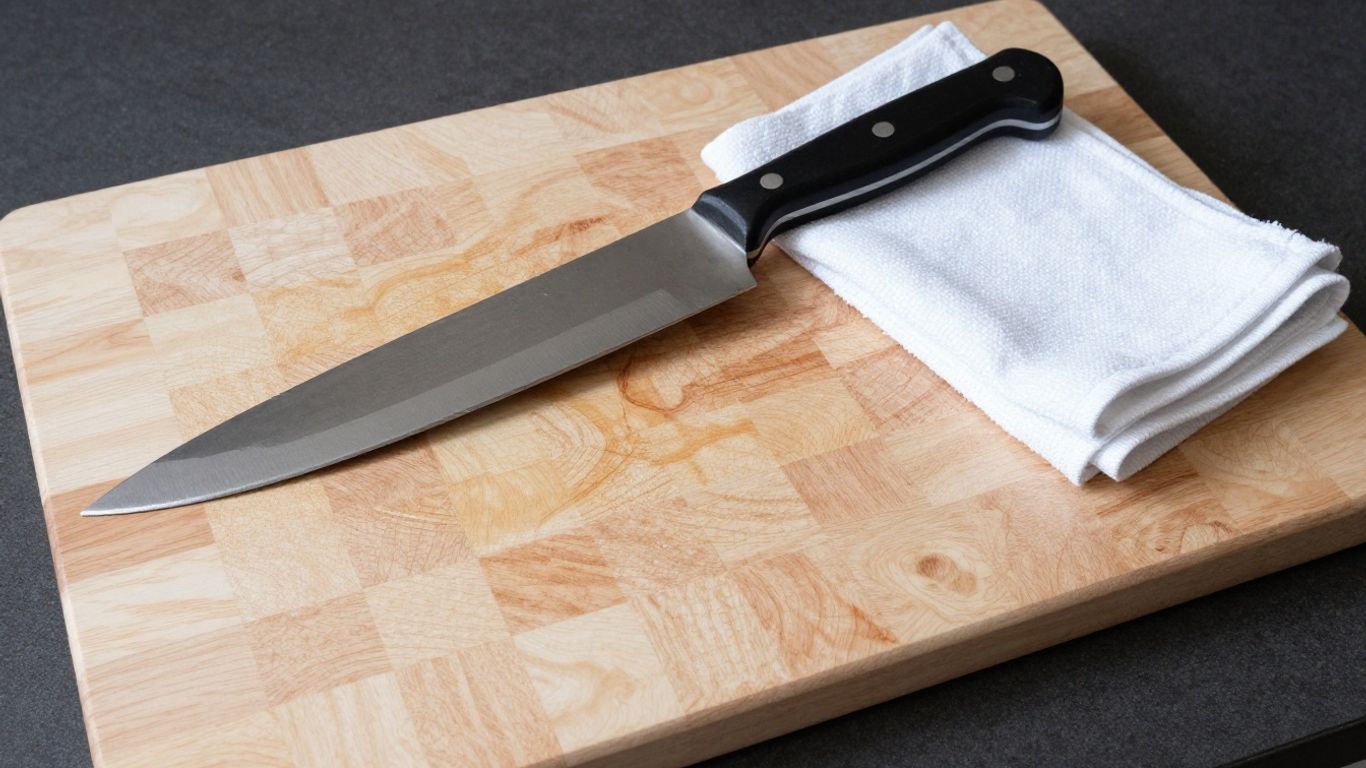
Rinse away food soon after cutting
Rinse off scraps and juices instead of letting them dry on the blade. This matters most after cutting ingredients such as citrus, tomatoes, or salty foods, which can leave reactive residue behind. If you are still cooking, wipe the blade clean and keep it dry between tasks rather than letting it sit on the board.
Wash by hand without soaking the blade
Wash the knife by hand with warm water and mild dish soap. Keep the wash brief, and do not leave the blade in a sink or basin; soaking exposes it to moisture and can also put your hand at risk when you reach into the water. A carbon steel knife is a tool to wash promptly, not a utensil to park under a pile of dishes.
A short routine helps you remember the important steps when dinner is moving quickly:
- Wipe or rinse off food as soon as you finish cutting.
- Wash by hand with mild soap when the prep task is done.
- Dry the blade and handle before setting the knife down to store.
That sequence takes little time and prevents the most common care mistake: leaving a wet, dirty blade unattended. For more on how blade and surface interact during prep, see this guide to a knife-friendly maple board surface.
Take extra care after cutting acidic or salty ingredients
Acid and salt can encourage discoloration or corrosion if they stay on the steel, so rinse them away promptly. Keep a clean damp cloth nearby during prep and wipe the blade when you switch from an acidic ingredient to another task. This is a practical pause, not a reason to avoid using the knife for everyday cooking.
Why should you dry the blade completely?
Dry the knife immediately after washing, rather than leaving it beside the sink to air-dry. Moisture left on carbon steel can lead to rust, including in places you may not notice at first. A few deliberate wipes take less time than removing corrosion later.
Wipe from the spine toward the edge
Hold the knife securely and wipe each side with a clean towel, moving from the spine toward the edge so your hand is not sliding along the sharp edge. Keep the towel flat against the blade and use controlled strokes. If the knife is very sharp, slow down; a rushed wipe is a good way to turn routine care into first aid.
Check the handle, bolster, and other moisture traps
Water can collect where the blade meets the handle, around a bolster, or in joints and crevices. Dry these areas carefully, then check both sides of the blade under good light. If the knife has a wooden handle, avoid leaving it wet or submerged as well.
Avoid air-drying and the dishwasher
Air-drying leaves the blade exposed to moisture for longer than necessary, while a dishwasher combines heat, water, and detergent in a rough environment for a knife. Hand washing and immediate drying are the safer routine. If the knife has already been through a dishwasher, dry it thoroughly and inspect it for damage or rust before using it again.
How do you apply a thin coat of oil?
Oil is useful when the blade is clean and dry, particularly before extended storage or when the surface needs a little extra protection. It is not a substitute for washing and drying after use. Apply a small amount, spread it evenly, then remove the excess so the knife is protected without feeling greasy.
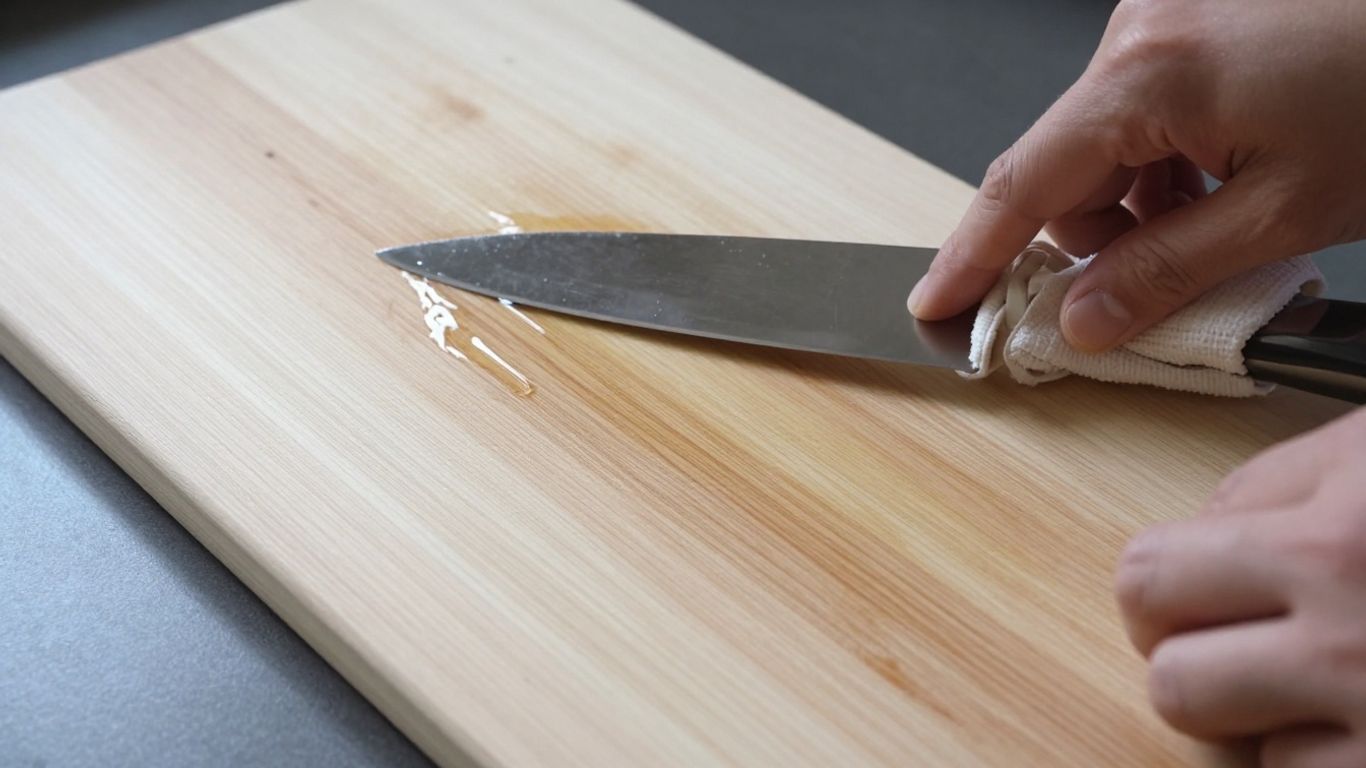
Make sure the blade is clean and dry first
Do not seal food residue or water beneath an oil film. Wash and dry the knife completely, including the area near the handle, before you begin. If you can still see moisture, wait a moment and wipe again; oil goes on only after the blade is ready.
Spread a small amount over both sides
Put a few drops of food-safe oil on a clean cloth, then wipe a thin coat over both faces of the blade. You are aiming for an even, barely visible sheen, not a thick layer. A lighter application is easier to wipe clean and less likely to leave residue on the knife or its storage surface.
Wipe away excess oil before storing
After coating the blade, use a clean part of the cloth to buff away any visible pooling or streaks. The remaining film should be very light. For routine guidance on washing and oiling a carbon steel blade, this carbon steel knife care guide offers another concise reference; follow your knife maker's instructions if they differ on oil choice or storage.
How do you handle stains, patina, and rust?
Not every color change means the blade is damaged. Carbon steel commonly develops a gray or blue patina with use, while orange or reddish rust is a sign to act. Learn to tell them apart before reaching for an abrasive, because unnecessary scrubbing can mark the blade.
Tell normal patina from active rust
Patina is usually a smooth change in color, often gray, blue, or darker in patches. It forms as the blade reacts with its surroundings and is a normal part of carbon steel use. Rust tends to appear orange or reddish and may feel rough or powdery; remove it rather than treating it as harmless patina.
Remove light rust without damaging the edge
For a small rust spot, begin with a gentle approach: use a soft sponge or cloth and mild soap, working carefully on the flat of the blade. Avoid scrubbing across the cutting edge, and do not bear down as if you are sanding a countertop. If the spot does not lift with light cleaning, consult the knife maker's care guidance before choosing a stronger rust-removal method.
Reclean and oil the blade after rust removal
Once the rust is gone, wash away any residue, rinse, and dry the knife completely. Check the blade again in good light to make sure no moisture or cleaning material remains around the affected area. A very thin film of food-safe oil can help protect the clean, dry blade during storage.
How should you store the knife between uses?
Store the knife somewhere dry where its edge cannot knock against other utensils. A block, a suitable sheath, or a secure magnetic strip can work, provided the blade is clean and dry before it goes away. Storage does not need to be elaborate; it does need to keep moisture and accidental contact under control.
Choose a dry block, sheath, or magnetic strip
Pick a storage option that fits your kitchen and keeps the edge protected. Make sure a block or sheath is dry inside before inserting the knife, and mount a magnetic strip securely if you use one. Avoid tossing the knife loose into a drawer, where the edge can hit other tools and the blade may remain hidden against damp debris.
Keep the blade away from damp drawers and sinks
A knife left near a sink or in a wet drawer can collect moisture even after you have dried it. Put it away from splashes and let the storage space stay clean and dry. If you see condensation or dampness where the knife rests, move it and check the blade before the next use.
Adjust your care routine for humid conditions or long-term storage
In a humid kitchen, check stored carbon steel more often and dry the blade again if moisture has collected. Before storing the knife for an extended period, wash and dry it thoroughly, then apply a very light coat of suitable oil. Even with patina, the blade still needs attention; that surface color slows corrosion but does not make the steel rustproof.
What to remember when you clean and oil a carbon steel knife
A carbon steel knife is easy to care for if you make prompt washing and complete drying part of the cooking routine. Use oil sparingly when it is useful, treat patina as normal, and respond to active rust before it spreads. Those small habits keep the blade ready for the next meal.
Best for
- Light, everyday blade protection: food-grade mineral oil, used sparingly.
- Occasional blade care: camellia oil, in a product meant for knife or food-contact use.
- Cooks who want less upkeep: stainless steel, which needs less attention than carbon steel.
Frequently Asked Questions
Can you wash a carbon steel knife with dish soap?
Yes. Wash it by hand with mild dish soap and warm water, rinse it well, and dry it immediately. Avoid soaking the knife or leaving it wet in the sink.
Should you oil a carbon steel knife after every use?
Not necessarily. Clean and dry the blade after every use, then apply a thin coat of suitable food-safe oil when needed or before extended storage. Follow the knife maker's care instructions if they specify a routine.
Is a gray patina on a carbon steel knife bad?
Usually not. A smooth gray or blue color change is generally normal patina. Orange or reddish rust, especially if rough or powdery, is different and should be removed carefully.
Can you put a carbon steel knife in the dishwasher?
No. Wash it by hand instead. A dishwasher exposes the blade to prolonged moisture, heat, and detergent, and the knife can also be knocked against other items.
What oil should you use on a carbon steel knife?
Choose a food-safe oil suitable for blade care, such as food-grade mineral oil. Avoid olive or vegetable oil for storage because cooking oils can break down and become rancid.
How do you prevent rust on a carbon steel knife?
Rinse away food soon after cutting, wash the knife by hand, and dry it completely before storage. Pay extra attention after cutting acidic or salty ingredients, and keep the knife in a dry place.
Can you leave a carbon steel knife wet briefly?
It is best to wipe it dry as soon as you can. Even a short delay can leave water sitting on the blade, especially around the handle or bolster, so make drying part of cleanup rather than a later task.
What should you do next?
- Set a dry towel by the sink so you can dry the blade right after washing.
- Keep a small bottle of food-grade mineral oil with your knives.
- Check the blade for rust spots and treat them early.
- Put the knife to work with knife skills for a more uniform dice.
- Compare blade shapes in nakiri vs santoku for vegetables.