END-GRAIN GUIDES
How to peel and dice fresh ginger: A simple step-by-step guide
Learn how to peel and dice fresh ginger, from spoon-scraping skin to sizing and storing it.
The short answer
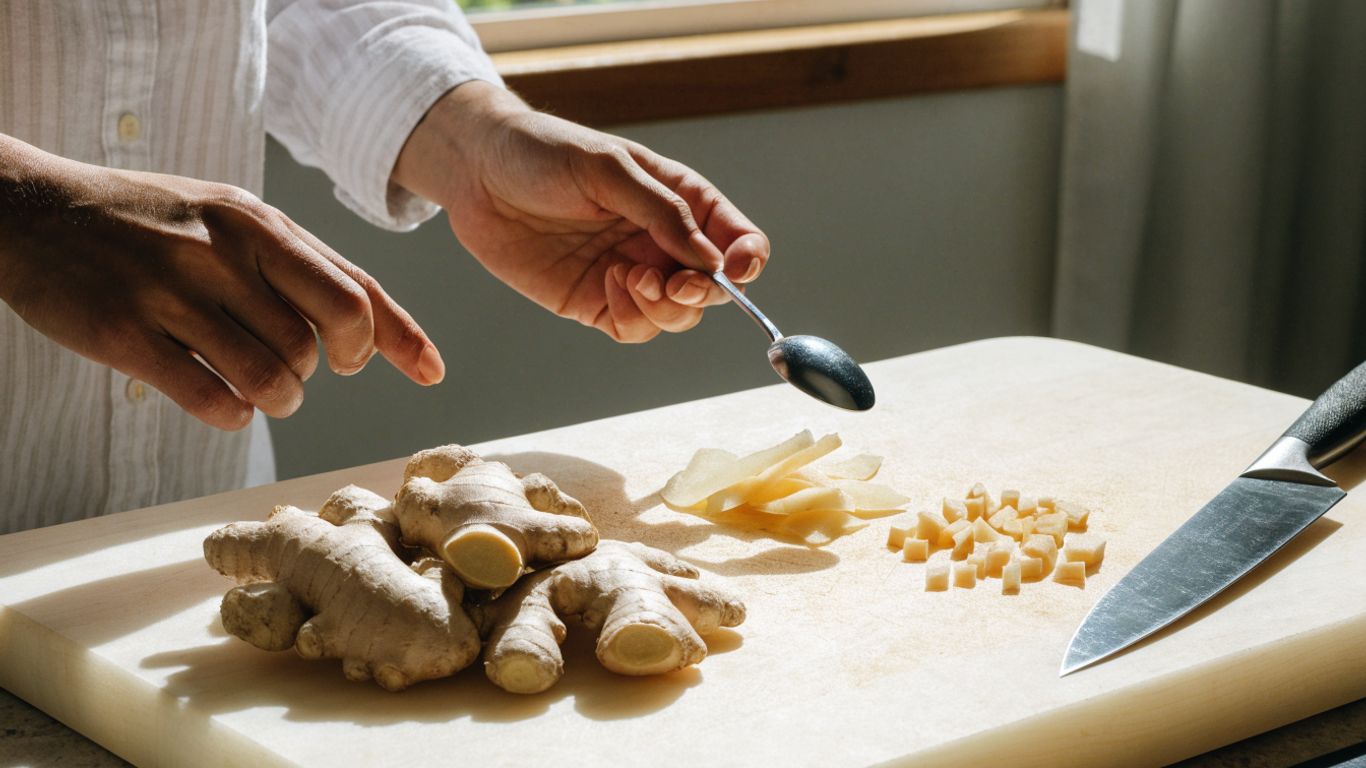
To peel and dice fresh ginger, scrape off the thin skin, slice the root into coins and planks, then crosscut the strips into cubes. A sharp knife, a stable piece of ginger, and a dice size suited to the dish make the job easier.
- Choose firm ginger and rinse away any dirt before cutting.
- Use a spoon to scrape skin from knobby areas.
- Make coins, planks, and strips before crosscutting into dice.
- Cut across visible fibers and adjust the dice to your recipe.
- Refrigerate cut ginger airtight or freeze extra for longer storage.
How do you choose and prepare fresh ginger?
Fresh ginger is easiest to work with when it feels firm and has smooth, taut skin. Choose a piece that suits the amount you need, then rinse and dry it before setting it on a stable cutting board. A little preparation now makes the peeling and cutting steps calmer, especially when the root has awkward branches.
Look for firm roots with smooth skin
Pick ginger that feels firm when gently pressed and has skin that looks relatively smooth rather than deeply wrinkled. Small dry marks where a branch was cut are common, but skip pieces with soft, damp, or moldy-looking spots. A compact, firm piece is generally easier to hold and cut than a dried-out root.
A quick check at the store can be simple. Look over the surface, feel for firmness, and choose the size you need rather than buying a large root by default. If you are setting up ingredients before cooking, a calm mise en place plan can help keep your prep space clear.
Rinse away dirt and dry the ginger
Rinse the ginger under cool running water and rub the surface with your fingers to loosen dirt from the creases. Pat it dry with a clean towel. A dry root is easier to grip, and excess water on the board can make your work area slippery.
Before you begin, gather just a few useful items so you are not reaching around with a knife in hand:
- A clean cutting board with a steady surface.
- A sharp chef’s knife or paring knife.
- A teaspoon for scraping the skin.
- A small bowl for the prepared ginger.
Set the bowl within reach, then clear a little room on the board for the root and your knife. That small bit of setup helps you keep your attention on the cut rather than on the clutter.
Break off a piece that’s easy to handle
If the ginger root is large, break off a section that fits comfortably in your hand. Smaller pieces are easier to turn as you peel them and easier to position securely for slicing. Keep the remaining root intact for storage, and avoid trying to control a long, branched piece all at once.
How do you peel ginger?
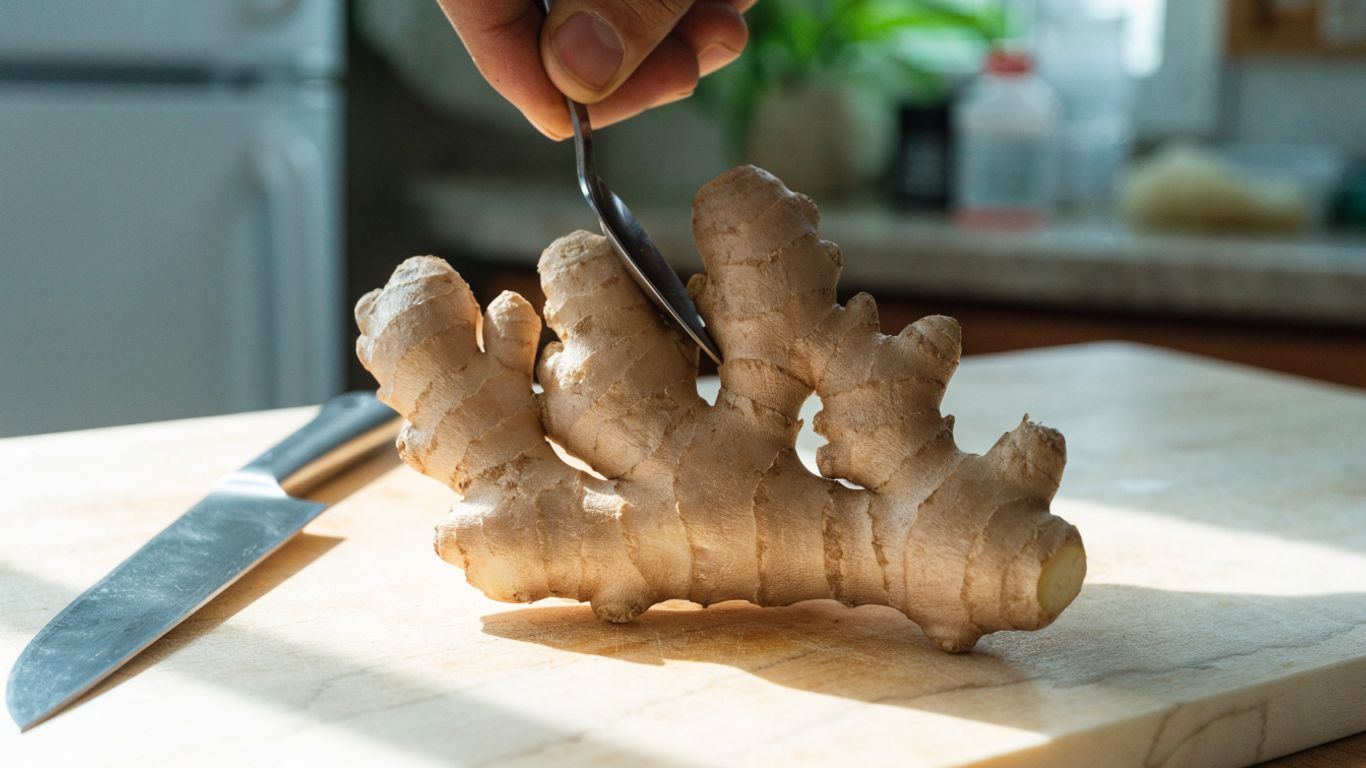
A teaspoon is a handy first choice for peeling fresh ginger because its edge can follow the root’s uneven surface. Scrape gently, then switch to a peeler or paring knife only where the shape allows it. The goal is to remove the thin skin without shaving away more of the ginger than necessary.
Scrape the skin with the edge of a spoon
Hold a small piece of ginger securely and draw the spoon’s edge across the skin in short strokes. Work around each branch, turning the root as needed; the spoon can reach into shallow curves more easily than a broad blade. Use light pressure and check the surface as you go, since the skin is thin.
For a close look at other approaches, this guide to peeling and cutting ginger covers spoon and peeler techniques alongside storage. Keep the ginger close to the board while scraping rather than holding it high above your work surface. That gives you more control and keeps stray bits from scattering.
Use a peeler or paring knife for broad, smooth areas
On a broader, relatively flat section, a vegetable peeler can remove the skin in a few controlled passes. A paring knife can also trim away a small patch, but keep the blade angled shallowly and cut away from your fingers. There is no need to force a peeler into every nook if the spoon can do the job with less waste.
Trim dry ends and any soft or blemished spots
Cut off dry ends and trim away any soft or visibly damaged areas before slicing. Use the knife tip carefully around a small blemish rather than removing a wide chunk of good ginger. Once trimmed, inspect the piece and remove any remaining skin that seems tough or dirty.
How do you cut ginger into strips?
To make ginger strips, work in a steady sequence: slice the peeled root into coins, stack the coins, then cut them into planks and narrow strips. Keep the ginger flat against the board whenever possible. Thin, even pieces are easier to stack and crosscut than thick, uneven chunks.
Slice across the root to make thin coins
Set the peeled ginger on its side and slice across it into coins. A stable, flat section makes the first cut easier; if the root rolls, trim a small sliver from one side to create a resting surface. Keep your fingertips curled back and make controlled cuts rather than rushing through the root.
Stack the coins and cut them into planks
Gather a few coins and stack them neatly, aligning their edges as much as their shapes allow. Cut through the stack lengthwise to form planks. If a coin is especially small or the stack shifts, work with fewer pieces; a smaller stack is easier to control.
Slice the planks lengthwise into narrow strips
Line up the planks and slice lengthwise to make strips. You can keep them as matchsticks for a stir-fry or gather them for a finer dice. For a more even result, use a repeatable cutting sequence and a stable board, as described in this guide to a uniform dice.
What dice size should you use?
Dice the strips by cutting across them into small cubes. Match the size to how the ginger will be used: a longer-cooked dish can accommodate larger pieces, while quick cooking calls for smaller ones. There is no single correct cube size, but keeping the pieces roughly alike helps them cook at a similar pace.
Crosscut the strips into small cubes
Gather the strips into a tidy bundle, hold them in place with curled fingertips, and cut crosswise. Use a steady rhythm and keep the knife tip and blade under control. If you want a finer result, gather the pieces after the first crosscut and chop them again, taking care not to let the small bits spread across the board.
Make larger dice for dishes with a longer cook time
For longer-simmered dishes, you can leave the pieces a little larger so they are easy to pick out or chew. The best size depends on the recipe and how noticeable you want the ginger to be. This rough guide gives you a starting point, not a rulebook:
| Approximate dice | A practical use |
|---|---|
| 1/8 inch | Quick-cooking dishes or a finer texture |
| 1/4 inch | General-purpose cooking |
| 3/8 inch | Longer cooking or more distinct pieces |
Choose one size for a batch when consistency matters, then adjust next time if the pieces feel too prominent or disappear into the dish. The root’s shape can make perfect cubes unrealistic, and that is fine; aim for pieces in a similar range.
Cut smaller pieces for quick-cooking recipes
Smaller pieces work well when the ginger has only a short time to cook and you want it distributed through the dish. After dicing, check for any long strips and chop them to match the rest. If you want still finer pieces, gather the dice and make a few additional cuts rather than chopping in a hurry.
What do you do with knobby or fibrous pieces?
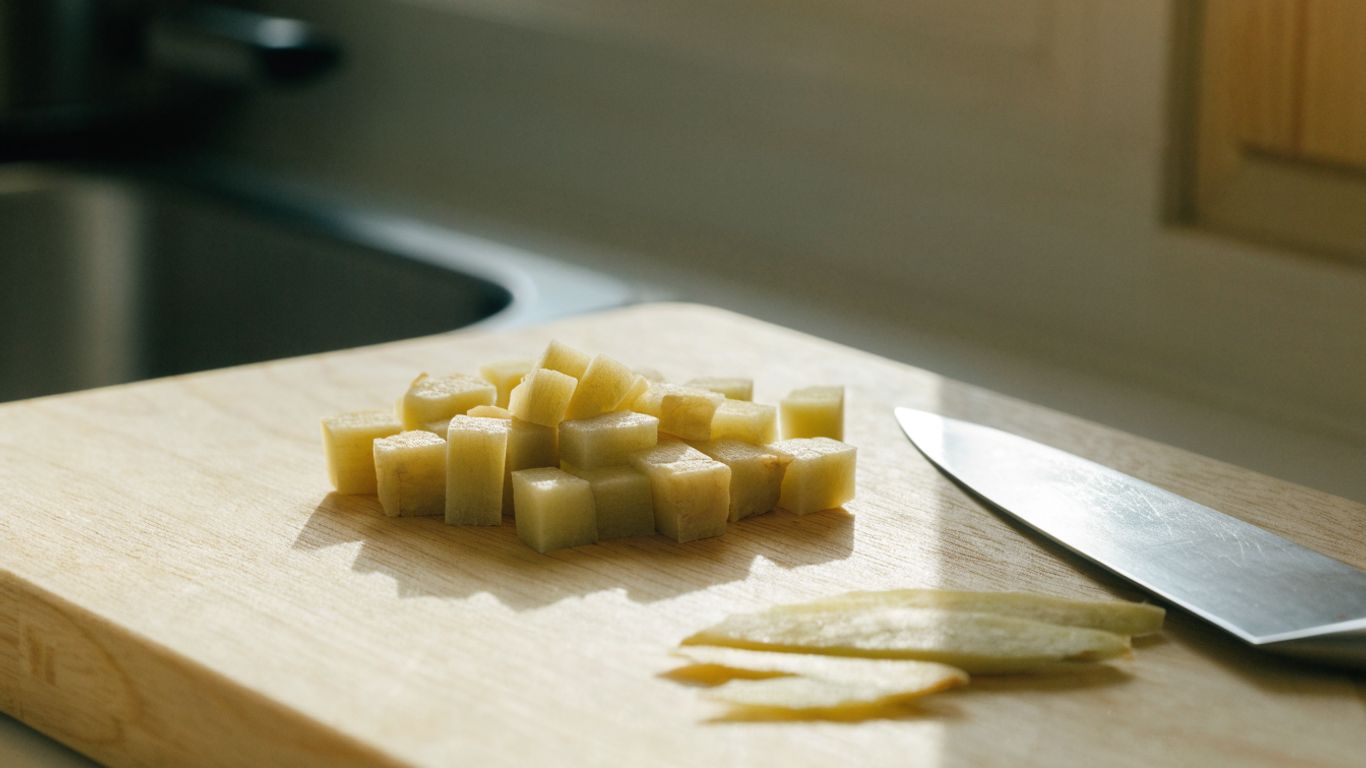
Knobby ginger takes a little more attention because its branches do not sit flat like a straight piece. Turn the root until you find a stable position, then cut it into manageable sections before making coins and strips. If the fibers are obvious, cut across them where you can to make the finished dice less stringy.
Turn the root to find a stable cutting angle
Place the piece on the board and rotate it until the broadest side rests securely. If it rocks, trim a thin slice from one side to create a flat base. Keep the piece low on the board and move your guiding fingertips back as the knife advances.
Cut around branches instead of forcing the knife
Separate the branches by cutting through their narrow joints rather than pushing a large knife through an awkward angle. Smaller pieces are easier to hold and give you more control over each cut. Once separated, treat each section like a short, straight piece and slice it into coins.
Slice across visible fibers for a less stringy dice
Look at the cut face for fibers running lengthwise through the ginger. When you can see them, position the root so your slices cross those strands rather than following them. This will not remove every fiber, but it can make the pieces less stringy to eat.
How do you store leftover fresh ginger?
Keep leftover ginger sealed and cold, and use cut pieces promptly. If you will not use the extra soon, freezing is a straightforward way to save it for later. Label or separate portions if that makes it easier to take out only what you need.
Refrigerate an unpeeled piece in a sealed container
Leave an unused piece unpeeled, place it in a sealed container, and refrigerate it. Keeping the skin on helps protect the surface while it waits for your next recipe. Check it before using and discard any portion that has become soft, moldy, or unpleasant-smelling.
Keep cut ginger airtight and use it promptly
Put peeled or diced ginger in a clean airtight container and refrigerate it. Cut surfaces dry out more readily than an intact root, so plan to use these pieces sooner. Take out only what you need with a clean utensil, then return the container to the refrigerator.
Freeze extra ginger for longer storage
For longer storage, place extra ginger in a freezer-safe airtight container or wrap it well before freezing. You can freeze it whole or in portions, depending on how you typically cook. Frozen ginger may be easier to grate while firm, but let the texture and size of your recipe guide how you prepare it.
What to remember when you peel and dice fresh ginger
Peel ginger with a spoon where the root is knobby, use a peeler on smoother sections, and cut it in stages to get the size your recipe needs. With a firm piece, a steady board, and a little care around the fibers, preparing fresh ginger becomes a simple part of cooking rather than a small kitchen wrestling match.
Best for
- Quick-cooking dishes or a finer texture: about 1/8 inch dice.
- General-purpose cooking: about 1/4 inch dice.
- Longer cooking or more distinct pieces: about 3/8 inch dice.
Frequently Asked Questions
Do you have to peel fresh ginger?
No, peeling is not always necessary if the skin is clean and in good condition. For this guide, remove it when you want a smoother texture or prefer not to have skin in the finished dish.
What is the easiest way to peel ginger?
A teaspoon is useful for scraping skin from uneven, knobby areas. Use a peeler on broader smooth sections if that feels more comfortable.
Can you peel ginger with a vegetable peeler?
Yes. A peeler works on relatively smooth, broad areas, but it can be awkward around tight bends and small branches.
How small should you dice ginger?
Choose a size that suits the recipe and cooking time. Smaller pieces are easier to distribute through quick-cooking dishes, while larger dice remain more distinct.
How do you make ginger less stringy?
Look for visible fibers and slice across them when you can. Cutting the root into short, manageable pieces also makes it easier to position the fibers before dicing.
Should you wash ginger before peeling it?
Rinse the root under cool running water and rub away visible dirt before peeling. Dry it with a clean towel so it is easier to hold and handle.
Can you freeze fresh ginger?
Yes. Freeze extra ginger in a well-sealed freezer-safe container or wrap it securely. You can store it whole or portion it for easier use later.
What should you do next?
- Buy a firm piece of ginger with smooth, tight skin.
- Peel only what you need and store the rest.
- Pick a dice size from the list above that suits your dish.
- Practice the same plank, strip, and cube sequence with knife skills for a more uniform dice.
- For loose herb chopping, try a mezzaluna.