END-GRAIN GUIDES
How to Choose an Edge Grain Maple Cutting Board for a Home Bar
Choose an edge grain maple cutting board for a home bar by matching size, grain, features, and care to your routine.
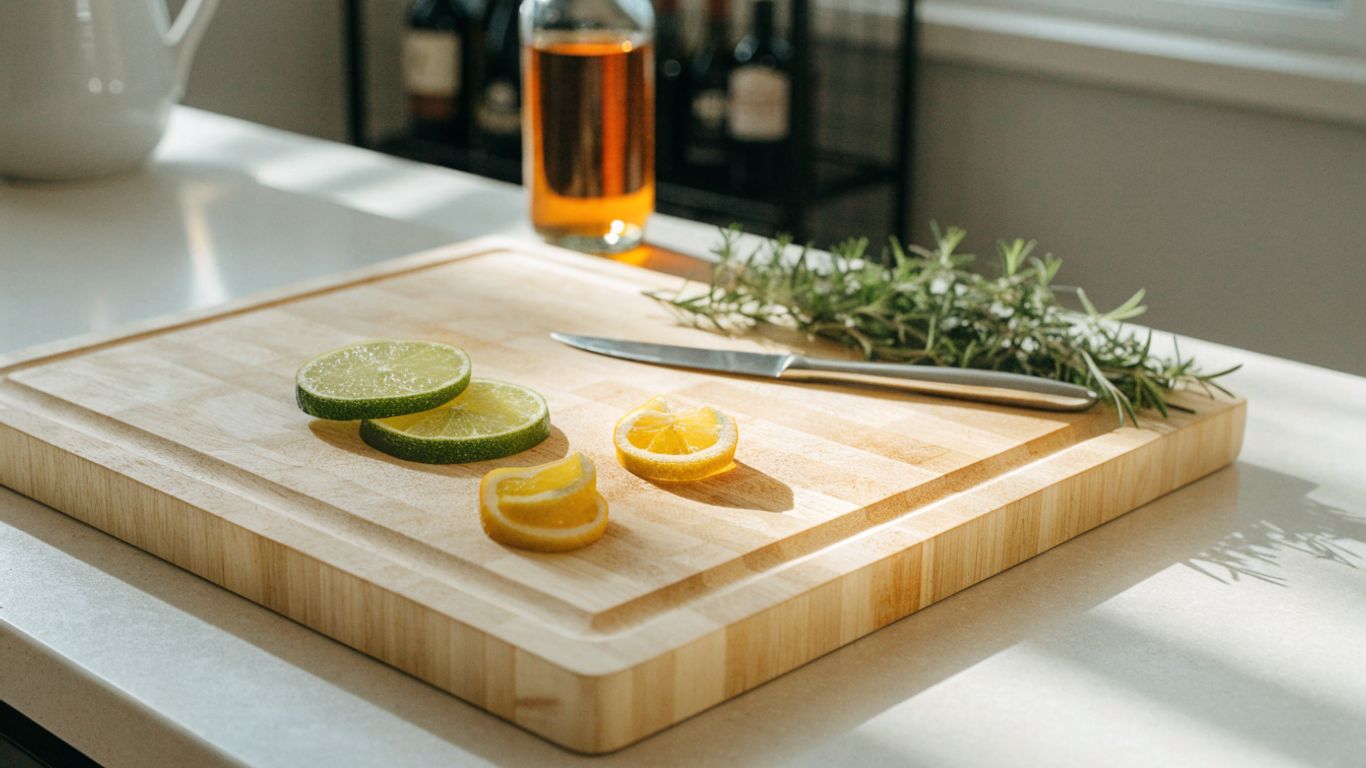
The short answer
An edge grain maple cutting board for a home bar makes sense when you want a dependable surface for citrus, herbs, and small snacks. Match its size and features to your counter, then clean and dry it promptly.
- Choose a board that fits your usual prep and serving tasks.
- Measure both your counter and storage space before buying.
- Edge grain shows long wood strips and offers a different knife feel from end grain.
- Grooves, handholds, and a stable base are useful only if they suit your routine.
- Hand-wash, dry, and condition the board regularly.
How do you match the board to your home bar routine?
An edge grain maple cutting board for a home bar is a practical pick if your regular prep is citrus, herbs, and small bites rather than heavy chopping. Think about what you cut most often and whether the board will stay at the bar or travel between counter and table. That routine matters more than a feature list.
Prep citrus wheels, twists, and herb garnishes
A board for cocktail prep should give you enough room to slice a lime, set aside a few wheels, and gather scraps without crowding the knife. A pale maple surface makes small pieces easy to see, while citrus juice can leave marks if it sits. Wipe the board after prep instead of letting sticky juice dry in place.
Slice fruit and snacks for serving
If you also cut apples, cheese, or a few pieces of fruit to serve alongside drinks, look for a board with a surface large enough to separate the food from your knife and scraps. The board can move straight to the table, but consider how its shape and finish look with your serving dishes. For broader selection criteria, this edge-grain maple board selection guide covers size, thickness, and construction.
Keep raw food prep separate from cocktail prep
For a home bar, it is simpler to reserve the board for ready-to-eat foods than to switch between those and raw meat. USDA Food Safety and Inspection Service guidance recommends separate boards for fresh produce and foods such as raw meat, poultry, and seafood. A little separation prevents a garnish board from becoming an improvised raw-food station.
A few habits keep the jobs distinct:
- Use the bar board for citrus, herbs, and ready-to-eat snacks.
- Keep raw meat and seafood on a separate board.
- Wash the bar board with soap and water after prep.
- Dry it before putting it away or setting it out for serving.
That routine is easy to remember, and it avoids asking one small board to do every kitchen job.
Decide whether the board will double as a serving piece
A board used for serving needs to feel comfortable to lift and have enough clear surface for the food you plan to arrange. If serving is part of the plan, keep knife work tidy and wipe up juice before the board reaches the table. A deep groove may help contain liquid during prep, though it takes up some of the flat surface you could use for arranging snacks.
What size fits your counter?
Choose a board that leaves usable counter space around it and can be stored without a wrestling match. Bar counters vary, so measure the actual work area rather than relying on a familiar kitchen-board size. Also check the sink or shelf where you plan to wash and store it.
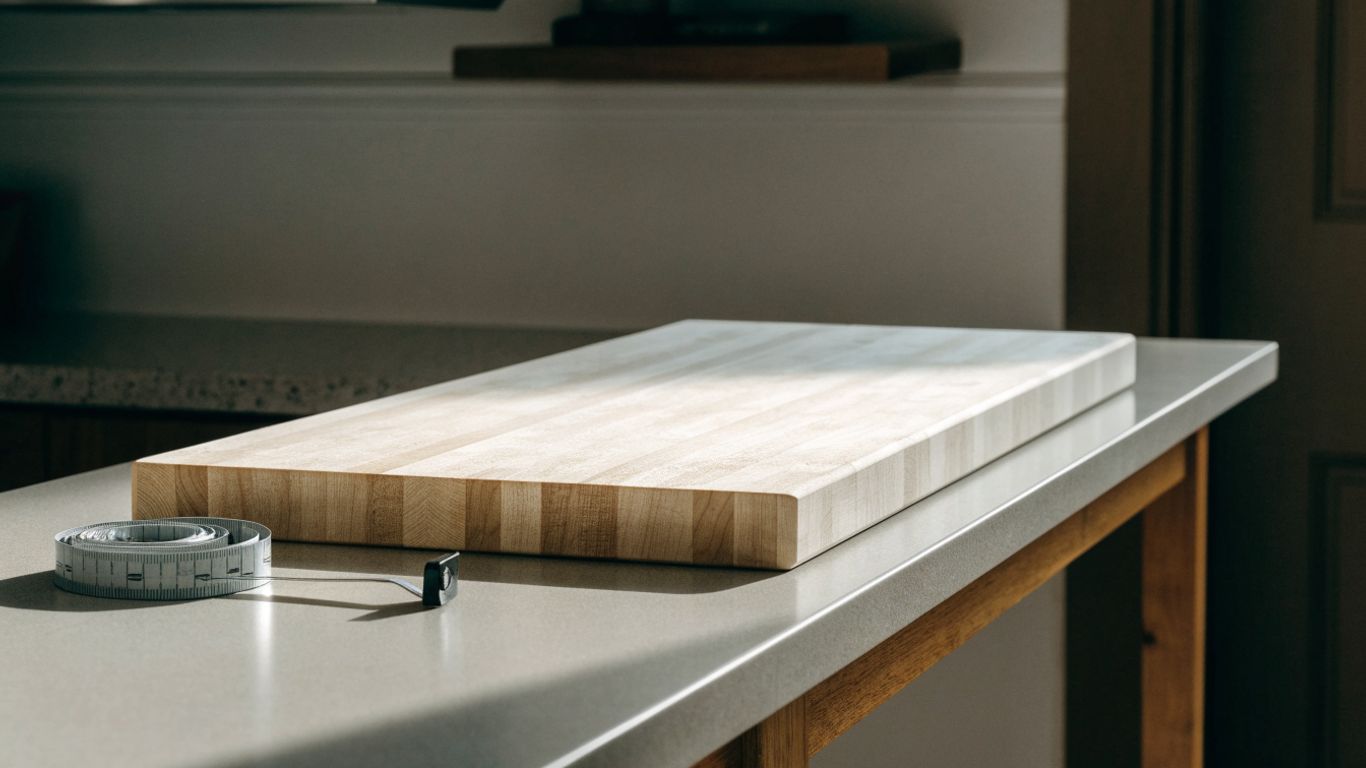
Measure the work area and storage spot
Measure the open counter area, then measure the cabinet, shelf, or drawer where the board will live. Include room to lift it out; a board that fits only when wedged in place is awkward in daily use. This edge-grain maple overview offers more context on choosing a board for your needs.
Leave room for a knife and garnish containers
A board should leave room for the knife and a small bowl or container for peels, stems, and finished garnishes. The useful footprint is the board plus the space needed to work around it. If the board fills the entire counter, prep may feel cramped even when its surface looks generous.
These approximate dimensions can help you picture the trade-offs before you shop:
| Approximate board size | A reasonable fit | Main trade-off |
|---|---|---|
| 12 × 8 inches | Occasional garnish prep | Easy to store, little room for extras |
| 16 × 10 inches | Regular citrus and snack prep | More working room, needs a wider shelf |
| 18 × 12 inches | Batch prep or serving several items | Spacious, harder to handle in tight spaces |
Treat those sizes as a starting point, not a rule. Your knife, containers, counter, and storage spot determine what feels practical.
Balance prep space with easy lifting and handling
A larger board gives you more room to work, but it can be less convenient to lift, wash, and store. Think about how often you will carry it from the counter to the sink or table. A handhold can help with lifting, while added weight may make the board feel steadier but less nimble.
Consider a compact board for occasional use
If cocktails are an occasional project, a compact board may be enough for a few citrus wheels and a handful of herbs. It is easier to put away and leaves more open counter space. The trade-off is that you will have less room to keep cut pieces separate from scraps.
What does edge-grain maple offer?
Edge grain is made by arranging long strips of wood so their narrow edges face up as the cutting surface. Maple gives the board a light, restrained look that suits a home bar, though visible knife marks and staining are part of ordinary use. If you are weighing edge grain against other constructions, focus on how you will use the board rather than treating one style as universally better.
See how the wood’s grain affects the board’s look
An edge-grain board shows long, parallel strips running along its length, so its pattern reads as linear rather than block-like. Maple’s pale color keeps the grain subtle and makes the board easy to pair with different tableware. For more on how edge grain compares with face grain, see this grain-construction comparison for maple boards.
Weigh durability against knife marks and wear
A wooden board will show signs of cutting over time. Edge grain is a sensible surface for everyday light prep, but regular knife contact can leave marks, and spills can change the color if they are left to sit. Routine washing and conditioning help keep the board in usable shape; they do not make it immune to wear.
Compare edge grain with end grain for bar tasks
For citrus, herbs, and small snacks, either construction can serve the basic task. The difference is the grain orientation at the surface, the board’s appearance, and how it feels under a knife. This quick comparison keeps the choice tied to bar use rather than kitchen shorthand.
| Construction | Surface appearance | Bar-prep consideration |
|---|---|---|
| Edge grain | Long, narrow parallel strips | Linear look and straightforward garnish prep |
| End grain | Small blocks with visible end rings | Block pattern and a different feel under the knife |
| Face grain | Broad wood surfaces | More continuous grain pattern, often suited to serving |
For a home bar, the practical question is whether you prefer the striped look and feel of edge grain or another surface style. Size, storage, and the way you plan to use the board matter just as much.
Consider maple’s light color against spills and stains
Maple’s light surface makes colorful garnishes stand out, but it can also show spills more clearly than a darker wood. Citrus, berries, and syrups are best cleaned up soon after use. If a mark remains, avoid treating the board as disposable; regular care and sensible cleaning are part of owning wood.
Which details matter for cocktail prep?
Choose features that solve a real task at your bar. A stable base is useful if you cut directly on the board, while grooves and handholds depend on how you handle and serve it. More features do not automatically make a better fit.
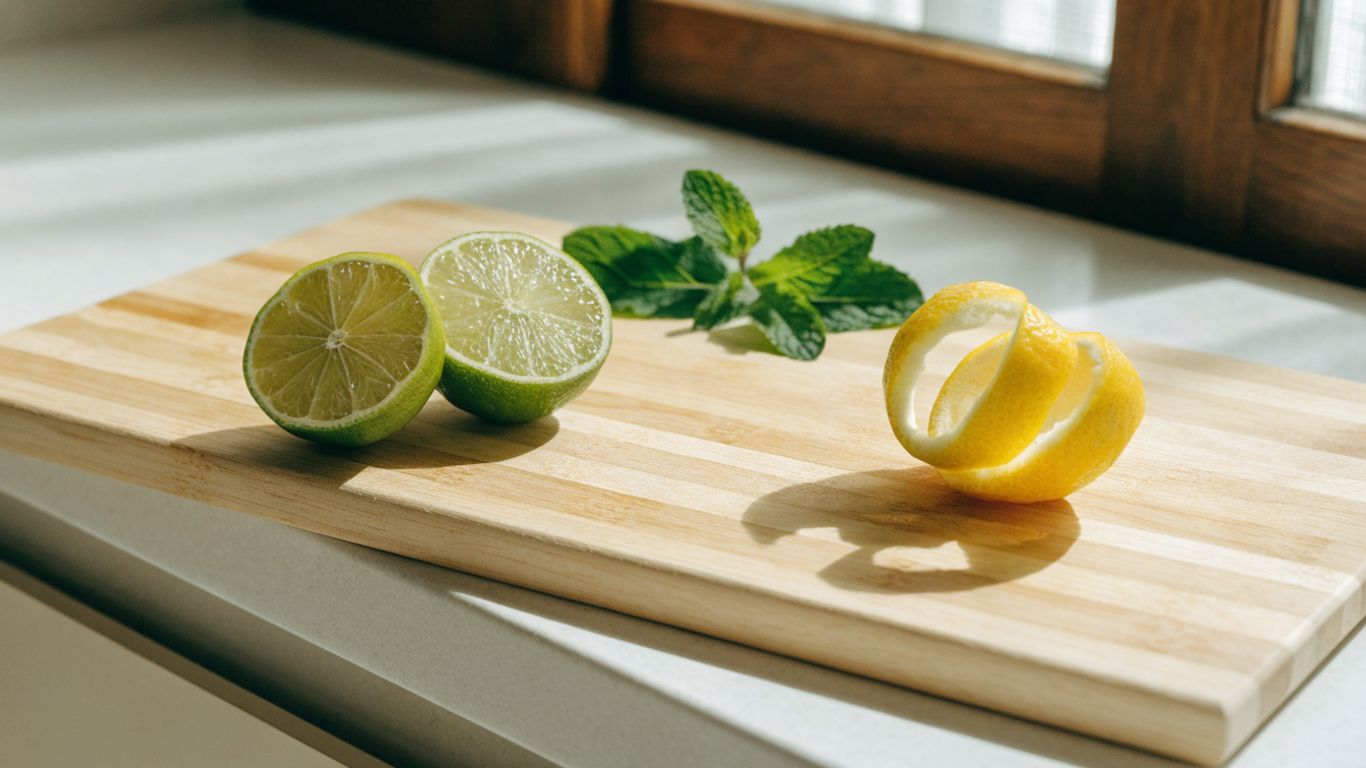
Look for a stable base that stays put
A board that shifts while you slice is distracting, particularly when you are working with a small knife and round fruit. Look for a flat underside and a surface that sits steadily on your counter. A folded damp towel underneath can add grip if the board itself has no non-slip feet.
Choose handles or a handhold if you’ll move the board often
If you often carry the board between the counter and the table, a handhold may make lifting easier. It also takes space from the edge, so consider whether the board will spend more time being moved or being used for prep. A compact board without a handhold can be simpler to store.
Decide whether a juice groove is useful for citrus
A groove can catch some liquid from cut citrus, but it reduces the flat area available for arranging ingredients. For a few lime wheels, a groove may not matter much; for a board that also serves snacks, uninterrupted surface can be more useful. Choose based on how much juicy prep you actually do.
Check whether the finish suits both prep and serving
Look for a finish intended for food-contact use, and follow the maker’s care instructions. A serving board should feel smooth and clean, without a heavy coating that makes you unsure whether it belongs under food. If the finish is unclear, ask the maker before buying rather than guessing from appearance.
How do you check build quality before you buy?
Inspect the board itself rather than relying on polished product photos. Look for tight joints, a smooth surface, and even contact with the counter. A large edge-grain maple board checklist can help you think through size, construction, and practical features before making a decision.
Inspect the glue lines and board surface
The strips should meet neatly, with no obvious gaps, rough patches, or raised edges. Run your eyes along the surface and the sides; uneven transitions can catch food or make cleaning more frustrating. Clear construction details are a better sign than vague claims about craftsmanship.
Look for even thickness and a flat underside
Even thickness gives the board a consistent feel on the counter, while a flat underside helps it sit steadily. Check it on a level surface if you can, and look for rocking from one corner to another. A board does not need to be unusually thick for light bar prep, but it should feel solid enough for its intended use.
Confirm the wood and finish are suitable for food contact
The listing should identify the wood clearly and state that the finish is appropriate for food contact. “Maple” alone may not tell you which species you are buying, so ask for specifics if they matter to your choice. You should also be able to find straightforward washing and conditioning instructions.
Compare construction quality with price
Price is only useful when you can compare what is actually included: wood, construction, finish, size, and any added features. A lower price may reflect a simpler board, while a higher one is not proof of better work. Compare the details and decide which ones you will use.
How do you care for the board between drinks?
Wash a wooden bar board by hand after use, then dry it promptly and store it where air can circulate. Do not soak it or put it in a dishwasher. Regular, simple care is less work than trying to rescue a board after juice and moisture have sat on it.
Wash by hand and dry it promptly
Use mild soap and warm water, then dry the board with a clean towel. Stand it upright to finish drying so air can reach both sides. Avoid leaving it flat and wet on the counter or soaking it in the sink.
Apply food-safe conditioner when the wood looks dry
When the surface starts to look dry, apply a conditioner made for cutting boards or food-grade mineral oil according to its directions. Avoid olive and vegetable oils, which are not suitable substitutes for board conditioner. Conditioning is maintenance, not a seal that makes the wood spill-proof.
Clean citrus, juice, and sticky mixers soon after use
Wipe off citrus juice, berry stains, and sugary mixers soon after prep. Wash the board by hand rather than scraping dried syrup aggressively, which can scuff the surface. If a stain remains, use a method intended for wooden cutting boards and test gently.
Store the board where air can circulate
Store the board upright or on a rack that lets air reach both faces. Keep it away from persistently damp spots, and make sure it is dry before putting it away. Good airflow is a small habit that helps the board dry evenly between uses.
Choosing an edge-grain maple cutting board for a home bar
The right edge grain maple cutting board for your home bar is the one that fits your counter, handles your usual garnish prep, and is easy to clean and store. Measure before buying, choose only the features you will use, and keep the care routine simple.
Best for
- Occasional garnish prep: about 12 × 8 inches, easy to store.
- Regular citrus and snack prep: about 16 × 10 inches, if you have a wider shelf.
- Batch prep or serving several items: about 18 × 12 inches, if you have room to handle it.
- Serving: face grain, with its broad, continuous grain pattern.
Frequently Asked Questions
Is an edge-grain maple cutting board suitable for cocktail prep?
Yes. It can handle common bar tasks such as slicing citrus, chopping herbs, and preparing small snacks. Choose a size that leaves room for your knife and ingredients.
What size cutting board works for a home bar?
Measure the counter and storage area first. A compact board suits occasional garnish prep, while a larger surface helps when you prepare several ingredients or serve food on it.
What does edge grain look like?
Edge grain has long, narrow strips running along the board. Maple’s light color makes that linear pattern relatively subtle.
Should a bar cutting board have a juice groove?
A groove can collect some liquid from citrus, but it reduces the flat area available for prep and serving. Decide based on how often you cut juicy ingredients.
Can I use the same board for raw meat and cocktail garnishes?
It is better to keep raw meat and ready-to-eat garnish prep on separate boards. Wash the bar board after use and keep its role clear.
How should I clean a wooden cutting board?
Hand-wash it with mild soap and warm water, then dry it promptly. Do not soak it or put it in the dishwasher.
How often should I condition a maple cutting board?
Condition it when the wood begins to look dry, following the maker’s instructions. Use food-grade mineral oil or a conditioner made for cutting boards, not olive or vegetable oil.
What should you do next?
- Measure your bar counter and the shelf where the board will be stored.
- Decide how often you prep citrus, herbs, and snacks.
- Wipe citrus juice off the board promptly and dry it after each session.
- Learn what normal wear looks like in how edge-grain maple ages over the years.
- Use the two-minute board reset between garnishes and snacks.